
The tragedy of a small family that begins on a train journey gradually becomes the tragedy of an entire society once it enters the gates of the court. Binu and her father, who lose the gold meant for her medical treatment, move from police stations to lawyers' offices and court corridors in search of justice. They are not merely characters in a story; they come to represent thousands of ordinary people trapped in systems they do not control.
Like the files gathering dust on court shelves, their hopes slowly begin to accumulate and stagnate. Delayed hearings, corruption, indifference, and the influence of money expose the many layers of institutional failure. The death of Binu becomes the film's most powerful moment. It is not just a personal tragedy. It is a reminder that when justice is delayed, lives are lost.
At that point, the film appears ready to pursue a difficult but important question: What happens when institutions fail ordinary people? Instead, the story takes a different path.
In the first half, the screen is filled with people waiting for justice. As the story progresses, however, those people gradually move to the background while Karuppu moves to the center. A story that begins with the suffering of ordinary people eventually rests on the shoulders of a divine saviour.
This is the film's most important political shift. Unlike many films where folk deities function as symbols, Karuppu becomes a direct agent of justice. He does not merely inspire people; he acts on their behalf.
Sociology student Viswanath observes:
"The film clearly exposes the failure of institutions. But instead of looking for the power to change them among the people, it looks for that power outside society., thats dangerous because in a time of such political crisis its a diversion from structural realities "
Across these stories, the problems remain deeply social— corruption, injustice, institutional failure. Yet the solutions are consistently in the hands of a single extraordinary GOD figure. As this narrative repeats, ordinary people slowly fade from the centre of their own struggles. They are shown as victims, or followers rather than as active agents of change.
The repeated emotional refrain—“Only Rajini can do it,” “Only MGR can do it,” “Only the hero can do it,” “Only God can do it”—creates a powerful cinematic experience. It offers relief and satisfaction. But it also shapes a deeper belief: that transformation does not belong to ordinary people and It must arrive from above, which is far whats happening to the people.
Real social change, however, does not follow the logic of a Saviour. It grows slowly through lived experience. People encounter injustice in their daily lives and begin to question it. They speak to each other, recognize , share suffering, and gradually form collective strength. Its evident, History shows that major transformations—whether in labour rights, education, democracy, or social justice—are not gifts from exceptional individuals. They are the result of collective action, often built over long and difficult struggles by ordinary people
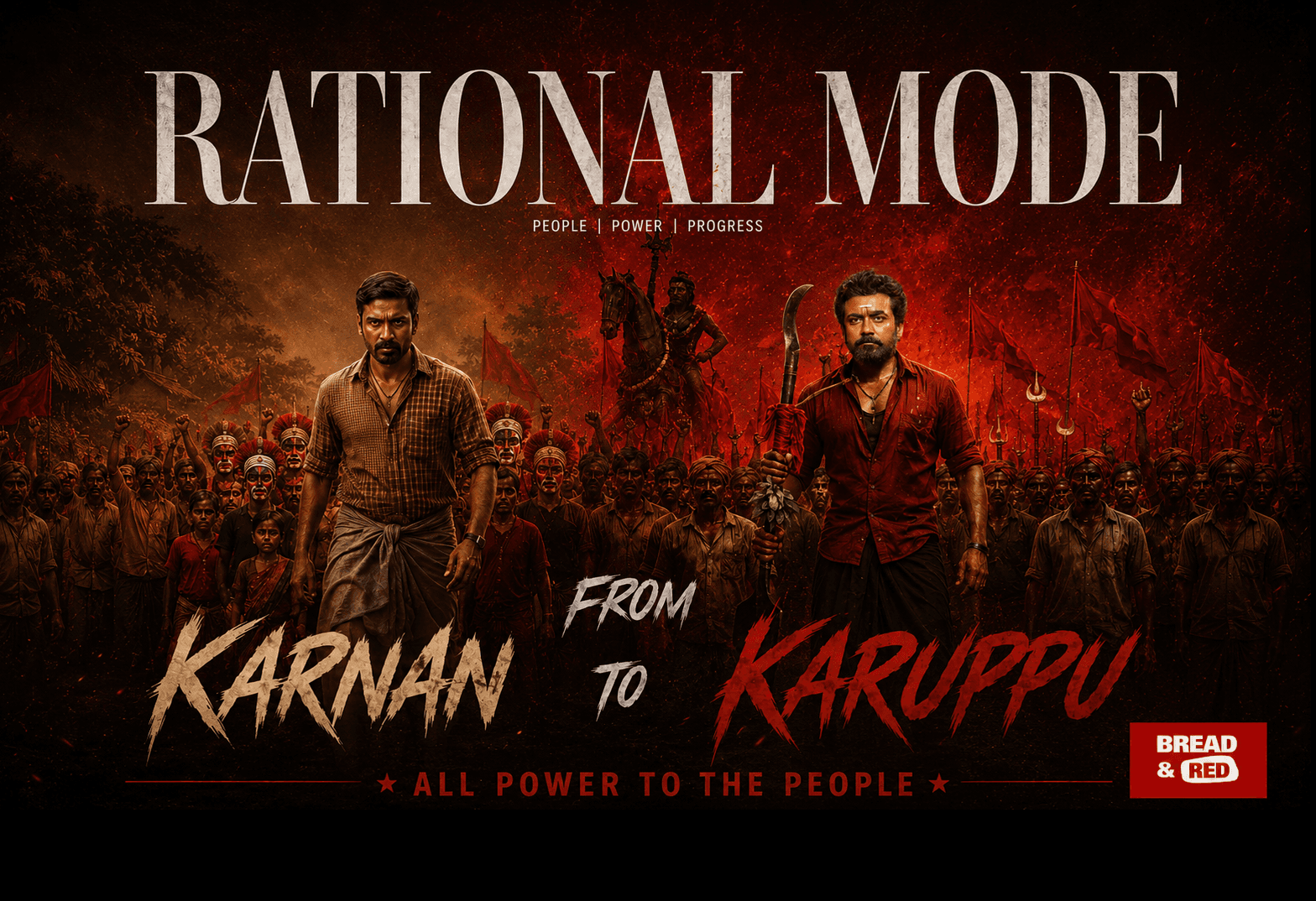
Commercial cinema often avoids reality because collective struggle is slow, complex, and difficult to dramatize. A Saviour is simpler. This contrast becomes even sharper when Karuppu is placed alongside the films of Mari Selvaraj. In Karnan, resistance emerges from an entire oppressed village that collectively rises against humiliation and structural violence. In Pariyerum Perumal, Pariyan's journey is one of political awakening, where he gradually understands the caste system and develops the consciousness to confront it. In Maamannan, democratic participation, electoral politics, and the struggle for representation become central themes. Across these films, change is not delivered from above by an extraordinary individual; it is created through the collective actions, experiences, and political growth of ordinary people.
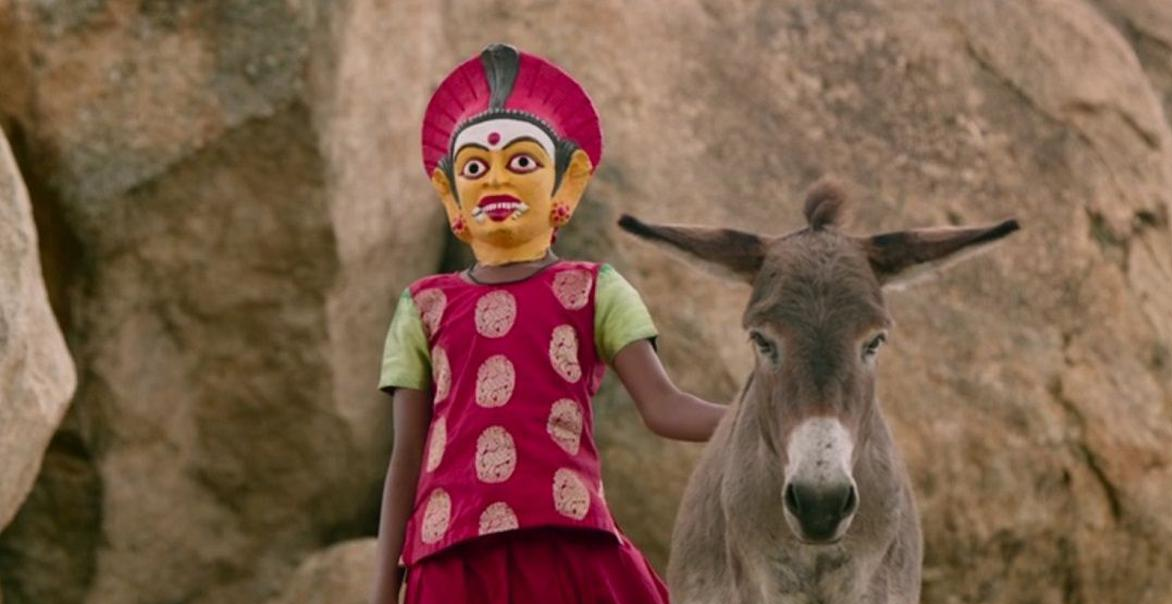
Karuppu appears to move in a different direction. While injustice and oppression remain social problems affecting the community, the responsibility for resolving them increasingly rests on the shoulders of a single heroic figure. The people endure, suffer, and wait, while Karuppu intervenes to restore justice as GOD Figure. The movement is therefore from "people create change" to "change arrives through a GOD , A saviour." When such a movie being celebrated as a authentic entertainment , it says something not only about the movie but also of the society. It reveals how much people have been depoliticized and critical view even on movie becomes a naive person seen as "Bad for business"
Karuppu successfully generates anger—anger toward corruption, legal delays, and the abuse of power. But the film hesitates when it comes to directing that anger toward collective action or social transformation.
Film enthusiast Sabarivasan argues:
"Even a circus can create applause. Art must do more than that, Art should reflect people's lives, provoke questions, and encourage audiences to see society differently. The most enduring works even Manjule's Fandry, VetriMaran's Asuran and Mari Selvaraj's "Karnan" were not those that merely excite or satisfy viewers for a few hours, but those that leave a question alive in the audience's mind long after the film ends."
Art is not merely a commodity created for profit, even though the contemporary film industry often treats it as one. Audiences are aware of this reality as well. Most of the time, they accept a film as entertainment and move on. Yet there are moments when certain stories compel us to pause, look beyond the spectacle, and question the ideas they present. Karuppu is one such film which has to be questioned and rationed.
By that standard, Karuppu remains a fascinating contradiction. It exposes corruption, captures the suffering of ordinary people, and reveals the failures of the justice system. Yet it struggles to imagine ordinary people as the creators of justice themselves and thats how modern films push people away from the stark reality making then unaware of their potential.
When a film like Karuppu shows how audiences have been gradually have been depoliticized and pushed away from critical thinking and trained to accept cinema mainly as emotional spectacle. 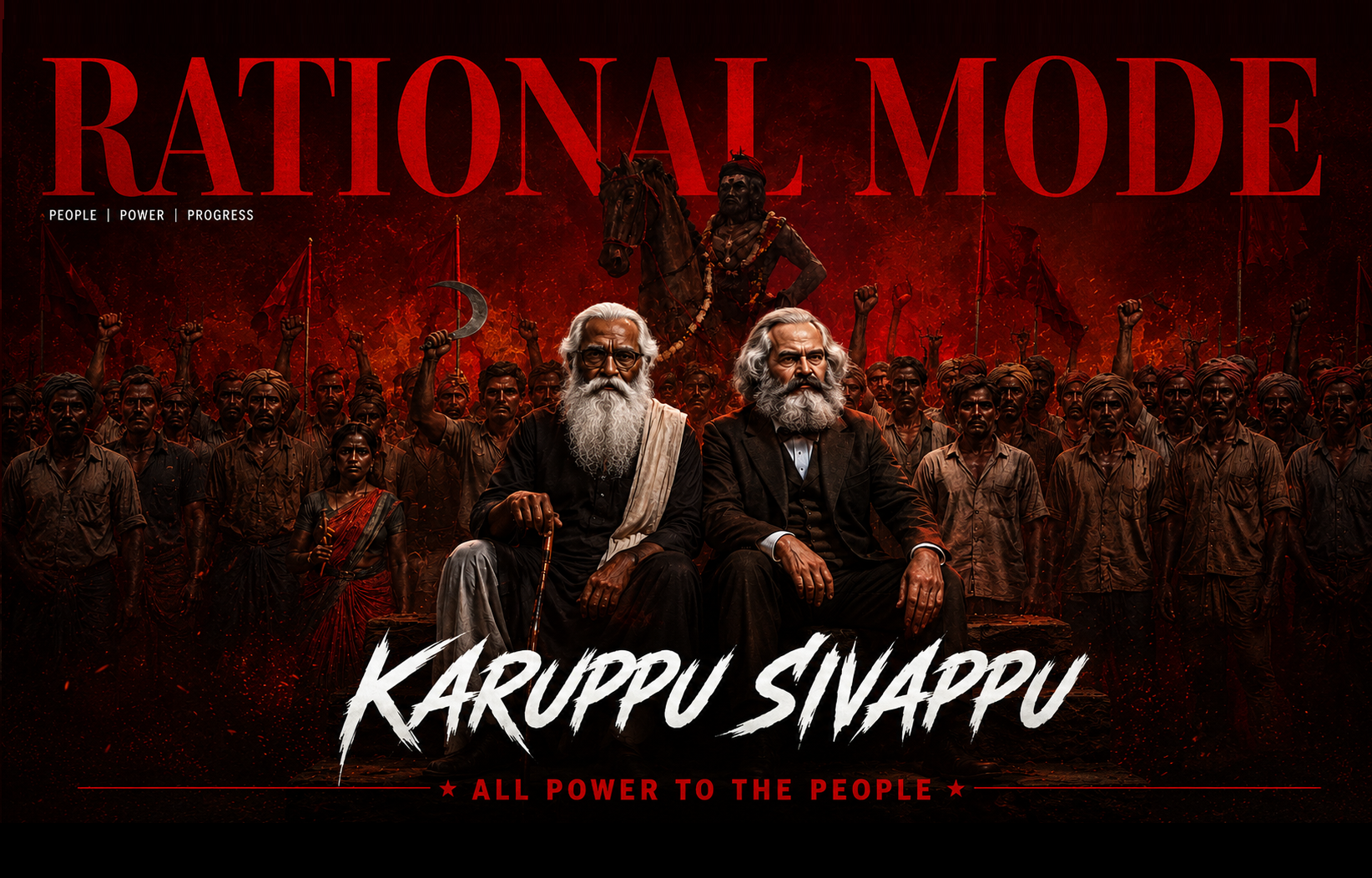
What people do not need is a “god mode” solution where change arrives from above through a hero or divine force. What they need is a critical political lens—a way of seeing society that helps them understand structures of power, recognize shared conditions, and discover their own collective strength. May be that's why the ideas of Marx and Periyar are still relevant because the push people to act for themselves, organize collectively and fight for their rights and justice, rather than being exploited and destroyed in the illusion of waiting for a Savior to come. If that's how society functions, then The deity of Vettai Karuppu, may not be a Saviour who replaces people, but as a force that stands with them — guides them to see clearly, awaken awareness, and build the confidence to act together. Real empowerment does not come from being rescued. It comes from learning how to struggle collectively, how to organize, and how to win through shared effort. Cinema becomes truly meaningful when it moves away from miracles and instead helps build consciousness.